
The First Thanksgiving
 If average Americans were confronted with the same circumstances that faced the Pilgrims in 1621, they likely would not feel very thankful. The Pilgrims, who had sailed to Plymouth on the Mayflower, had lost half their party to illness, survived a brutal winter, suffered through famine and failed crops, and were forging a new colony in a raw and hostile land. Unlike most people in our drastically more affluent society, the Pilgrims still found great reason to thank the God of the Bible in the face of great difficulty.
The celebration now referred to as the first Thanksgiving marked a time of God’s great blessing to the Pilgrims after a difficult winter and was centered on thanking God for his grace. Squanto, a Native American who had learned English through his former enslavement, served as a chief means of grace as he taught the Pilgrims how to properly plant corn and catch fish to survive. Through his mediation the colony formed an alliance with the nearby Wampanoag tribe, establishing peace between the two peoples that would endure for more than 50 years. This peace marked the Thanksgiving feast of 1621 as both the new settlers and Native
Americans gathered to celebrate with a meal, dining on fowl, venison, and likely cranberries. In “Of Plymouth Plantation,” one of the first histories of the New World settlements, the colony’s first governor, William Bradford, expressed the Pilgrims’ thanks to and reliance upon God in the face of extreme difficulty stating that they “were ready to perish in this wilderness; but they cried unto the Lord, and he heard their voice, and looked on their adversity. Let them therefore praise the Lord, because he is good, his mercies endure forever.” The colonists recognized their great need for God and voiced both their appreciation and continued reliance upon him.
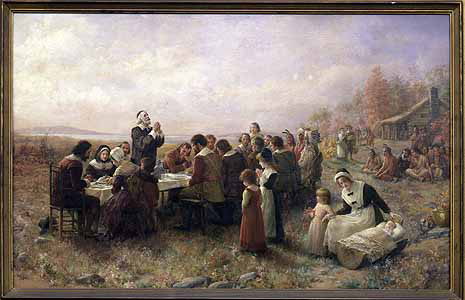 This first Thanksgiving was not an entirely unique holiday for the early colonists. The Pilgrims were accustomed to proclaiming days of thanksgiving that typically included times of prayer and fasting as they expressed their gratitude to and reliance upon God. Following the first Thanksgiving, for example, a second Thanksgiving in 1623 was marked by a religious fast in which they thanked God for the end of a potentially devastating drought. These special days provided the entire community the opportunity to focus upon the source of the mercies they received.
Ultimately Christians alone have reason for unending thanksgiving. In his sermon, “Thanksgiving,” Pastor Mathew notes that the Christian gives thanks “because of the miracle of grace that brought about our eternal salvation.” This thanksgiving surpasses all circumstances and points to our eternal hope in Christ. To read more sermons from Pastor Mathew regarding the Christian’s reasons to give thanks, peruse the sermon archive.
This post was contributed by Sarah Trombly.